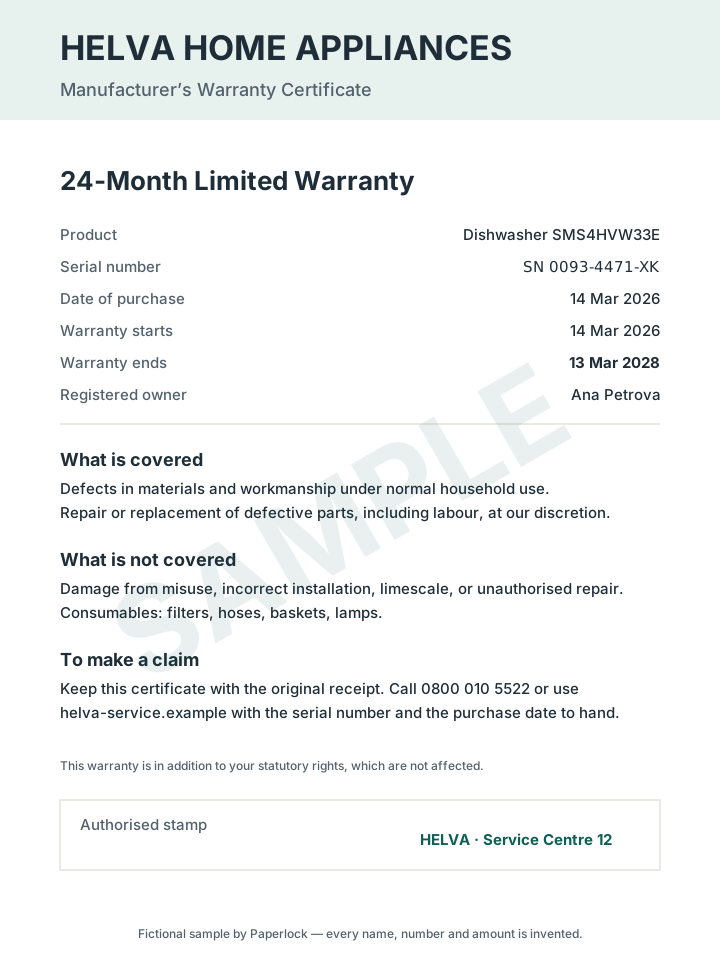
The sample is a manufacturer's warranty certificate for the same fictional dishwasher as the appliance receipt example. Certificates vary in layout, but they all answer the same six questions, and those are the six things worth reading before you file it.
The six things a certificate tells you
| Section | On the sample | What it decides |
|---|---|---|
| Product and serial number | SMS4HVW33E, SN 0093-4471-XK | Whether this certificate covers your unit at all |
| Start date | 14 Mar 2026 | Almost always the purchase date on the receipt |
| Length or end date | 24 months, ends 13 Mar 2028 | The last day a claim is free |
| What is covered | Defects in materials and workmanship | The kind of fault you can claim for |
| What is excluded | Misuse, limescale, unauthorised repair, consumables | The reasons a claim gets refused |
| How to claim | Phone, web form, serial and receipt to hand | Who you call and what they will ask for |
The serial number is the field people skip. A certificate that does not match the label on the machine is a certificate for somebody else's machine, and support desks check. Compare them once, the day the appliance arrives.
Where the dates come from
Most certificates state a length, not an end date. Work it out now and write it on the certificate: purchase date plus the warranty months, using calendar months. A 31 January purchase with a 6-month warranty ends on 31 July; with the length in months, the end lands on the same day of the month, or the last day of a shorter month. The purchase record builder does this and adds a "test everything" reminder 30 days before the end, which is the single most useful thing you can do with a warranty: run every program and press every button while a fault is still the maker's problem.
Warranty, guarantee, and the law
A warranty is the manufacturer's voluntary promise on its own terms. It can be generous or thin, and it can exclude what it likes. Separately, consumer law in most countries gives you a legal guarantee against the seller that the certificate cannot shrink: at least two years in the EU, up to six years to bring a claim in England and Wales, a "reasonable time" under Australian Consumer Law, and various implied-warranty rules in US states. The certificate's own footnote, "your statutory rights are not affected," is a reference to this.
The practical consequence: when the manufacturer's warranty has ended and the appliance fails early, the seller may still owe you a remedy. The guide to keeping track of warranties covers the rules by country; this page is about the document in your hand.
What to save alongside it
- The receipt. A certificate proves the promise; the receipt proves the date and that the promise applies to you. Support will ask for both.
- The delivery note, if delivery came later than purchase. Some certificates and most laws count from delivery.
- Registration confirmation, if you registered the product. It is also how the maker reaches you about safety recalls.
- Every repair record. Under warranty, a repair invoice shows the fault history; the repair invoice example shows what a good one contains.
The questions it will have to answer
- Is the dishwasher still under warranty, and until when?
- Is this fault covered, or is it on the exclusions list?
- What number do I call, and what will they ask for?
- Does the serial number match?
The manual way: photograph the certificate next to the receipt, name both with the date and item, and put the end date in your calendar. The Paperlock way: photograph both into the vault; Paperlock reads the end date, files the pair together, and reminds you 30 and 7 days before it lapses. Either way, the certificate goes from "somewhere in a drawer" to "the answer to a question."