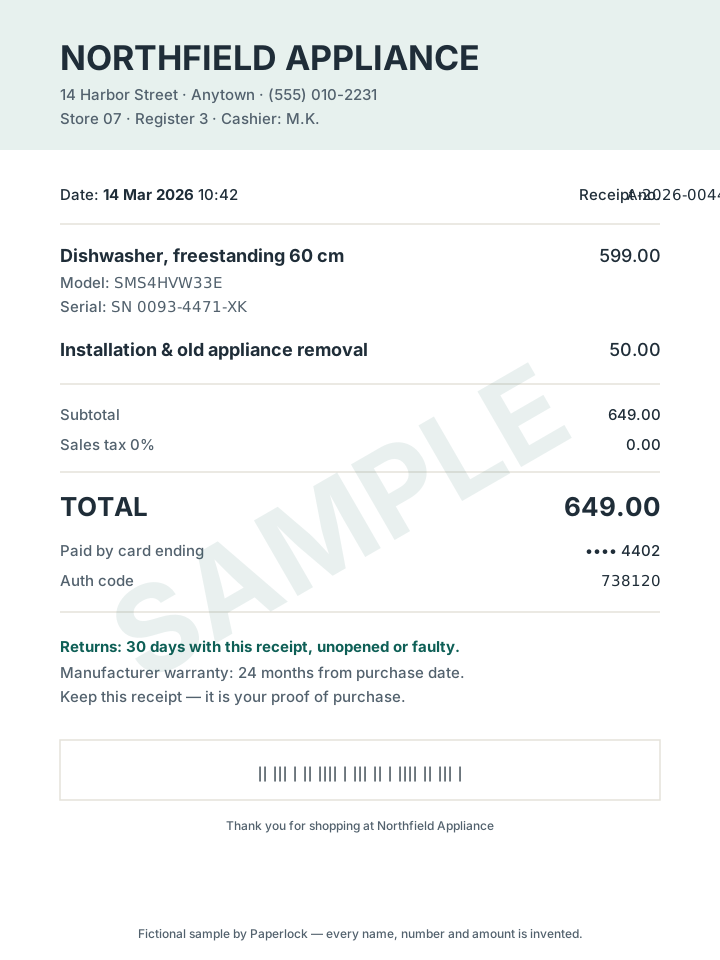
The sample above is a receipt for a dishwasher from a fictional store. Every name and number is invented, which is the point: you can look at it closely without looking at anyone's real purchase. It has the shape of the receipt you got with your last appliance, and the same handful of lines that will matter two years from now when the machine stops draining.
The fields that matter
| Field | On the sample | Why you will need it |
|---|---|---|
| Store and contact | Northfield Appliance, phone | Returns and store warranties go back to the seller |
| Date and time | 14 Mar 2026, 10:42 | Every deadline counts from this date |
| Receipt number | A-2026-004471 | The store's lookup key if the paper is lost |
| Product description | Dishwasher, freestanding 60 cm | Confirms what was bought, not just how much |
| Model number | SMS4HVW33E | Identifies the exact product for parts and claims |
| Serial number | SN 0093-4471-XK | Ties this receipt to your unit; manufacturers ask for it |
| Total paid | 649.00 | The refund amount; proof of value for insurance |
| Payment method | Card ending 4402 | Matches the receipt to a statement if ever disputed |
| Return terms | 30 days, unopened or faulty | The first deadline |
| Warranty statement | 24 months from purchase | The second deadline, and who owes it |
Two of these are routinely missing from real receipts: the serial number and the warranty length. Many stores print only the model. If yours does, write the serial number from the appliance's rating label on the receipt by hand before you photograph it, and pull the warranty length from the certificate or manual.
What to save alongside it
A receipt on its own answers "when and how much." A complete purchase record answers "what exactly, from whom, under what promise." Keep together:
- The warranty certificate or the warranty page from the manual. It names the period, what is excluded, and how to claim. The warranty certificate example shows what to look for.
- The order confirmation or delivery note, if you bought online or had it delivered. It carries the order number the retailer's support team will ask for.
- A photo of the rating label on the appliance itself, with model and serial number. The box goes in the recycling; the label stays on the machine.
- Later, every repair invoice. A repair under warranty extends nothing, but a paid repair often carries its own guarantee, and a history of the same fault is the strongest argument for a replacement. See the repair invoice example.
The questions this receipt has to answer
Write these down now, because they are the ones you will type into a search box in a hurry:
- When did I buy the dishwasher, and is it still under warranty?
- What is the model and serial number?
- How much did I pay, and what did installation cost?
- Which store, and what was their return policy?
- Where is the receipt? (The honest answer for most people: "in a photo, somewhere.")
If you keep the receipt as a photo in your camera roll, the first four questions require finding the photo first, and the fifth is the whole problem. The guide on finding receipts in your iPhone photos covers the rescue operation. Doing it right the first time is cheaper.
Filing it so it stays findable
The manual way. Photograph the receipt on the day. Name the file with the
date and the item: 2026-03-14 dishwasher receipt. Put it in a folder called
Appliances with the warranty certificate and the label photo. Add two calendar
entries: the last return day and the warranty end, with a reminder a month
before the second so you can test every program while faults are still free.
The purchase record builder does the date
arithmetic and writes the calendar file for you.
The Paperlock way. Photograph the receipt and the warranty certificate into the vault. Paperlock reads the store, the date, the amount and the warranty end, files them without you naming anything, and reminds you 30 and 7 days before the warranty ends. When the machine floods, you ask "when did I buy the dishwasher?" and get the date with the receipt attached. Same photo, no folder.
Two things receipts do not tell you
The receipt says "24 months warranty" because the manufacturer's promise is 24 months. In many countries the law gives you more: the EU legal guarantee runs at least two years from delivery regardless of the warranty card, and in England and Wales you can bring a claim for faulty goods for up to six years. The receipt is silent on this. The guide to tracking warranties covers the rules by country.
And a receipt does not guarantee a repair. It is evidence. The useful promise of keeping it well is that when something fails, the evidence is at hand in the time it takes to ask a question, not the time it takes to empty a drawer.