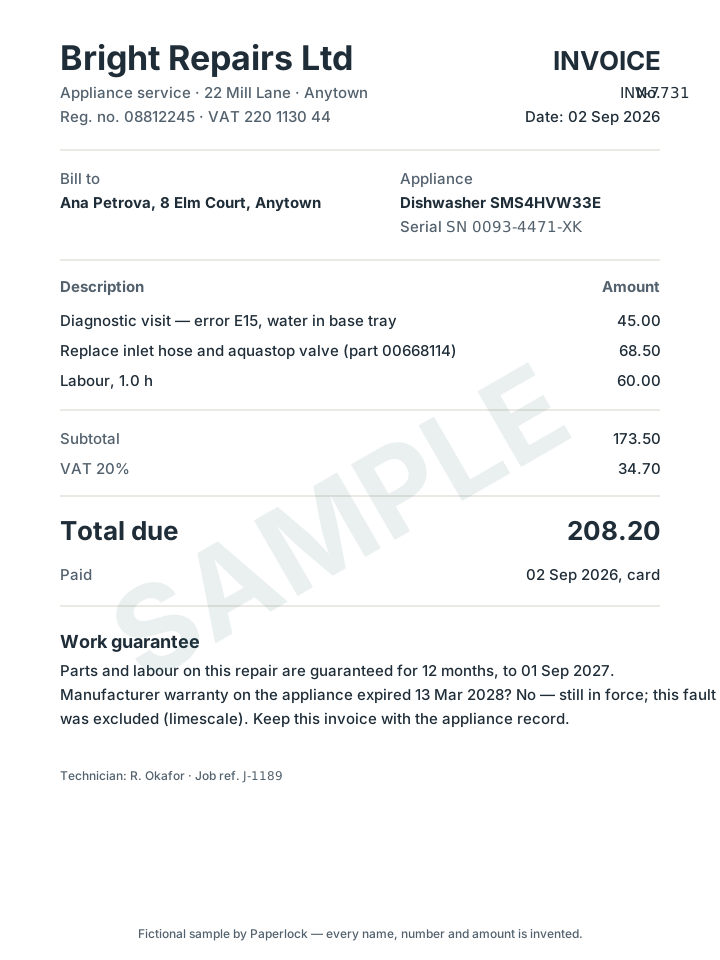
The sample is an invoice from a fictional repair firm for the same fictional dishwasher as the appliance receipt and warranty certificate examples. It is the third document in a purchase record, and the one most people file in the wrong place: with the month's bills rather than with the appliance it belongs to.
Reading the invoice
| Line | On the sample | Why it matters later |
|---|---|---|
| Repairer's details | Bright Repairs Ltd, registration number | Who to call if the repair fails |
| Invoice number and date | INV-7731, 02 Sep 2026 | The repair guarantee counts from this date |
| Appliance, model, serial | Dishwasher SMS4HVW33E, SN 0093-4471-XK | Ties the repair to your unit and its warranty |
| Reported fault | Error E15, water in base tray | The history a second technician needs |
| Parts, with part numbers | Inlet hose and aquastop valve, 00668114 | Proves what was replaced; spots repeat failures |
| Labour | 1.0 hour | The part of a claim insurers and makers scrutinise |
| Total and payment | 208.20, paid by card | Proof of cost for insurance or a refund claim |
| Guarantee on the work | 12 months, to 01 Sep 2027 | A new deadline to track |
| Warranty status note | Fault excluded (limescale) | Why this repair was paid, not free |
The last line is the interesting one. This repair was paid even though the appliance was inside its 24-month warranty, because the cause (limescale) is on the exclusions list of the certificate. A good repairer writes that down. It tells you, and any future claim, exactly where the warranty stopped and your money started.
The invoice starts a new clock
A paid repair usually comes with its own guarantee, six to twelve months on parts and labour. That is a deadline in its own right: if the same fault returns inside it, the second repair is free. Write the end date on the invoice, or let the purchase record builder hold it alongside the original warranty end. Two clocks, one record.
Why repeat faults matter
A single repair is an event. Two repairs for the same fault are a pattern, and consumer law in most places treats a pattern differently: after a failed repair, you can often insist on a replacement or a refund instead of a third attempt. The argument only works if you can show the history, which means the first invoice has to be findable when the second fault appears. Part numbers make the pattern undeniable. The warranty returns scenario walks through the conversation.
What to save alongside it
- The receipt and warranty certificate for the appliance, in the same place. The invoice makes sense only next to them.
- Photos of the fault, if you took any. A picture of the error code on the display or the water on the floor dates the problem.
- Correspondence: the email booking the visit, the quote, any dispute about what was covered.
- Insurance claim reference, if the fault followed an insured event.
The questions this invoice will answer
- Has this dishwasher been repaired before, and for what?
- Is the repair still guaranteed?
- What part failed, and what did it cost?
- Was the fault covered by the warranty, and if not, why?
The manual way: photograph the invoice the day you pay, name it with the date and the appliance, and file it in the appliance's folder with a calendar entry for the repair guarantee's end. The Paperlock way: photograph it into the vault; Paperlock reads the date, the amount and the guarantee end, files it with the receipt and the certificate for the same appliance, and answers "has the dishwasher been repaired before?" with the invoice attached.