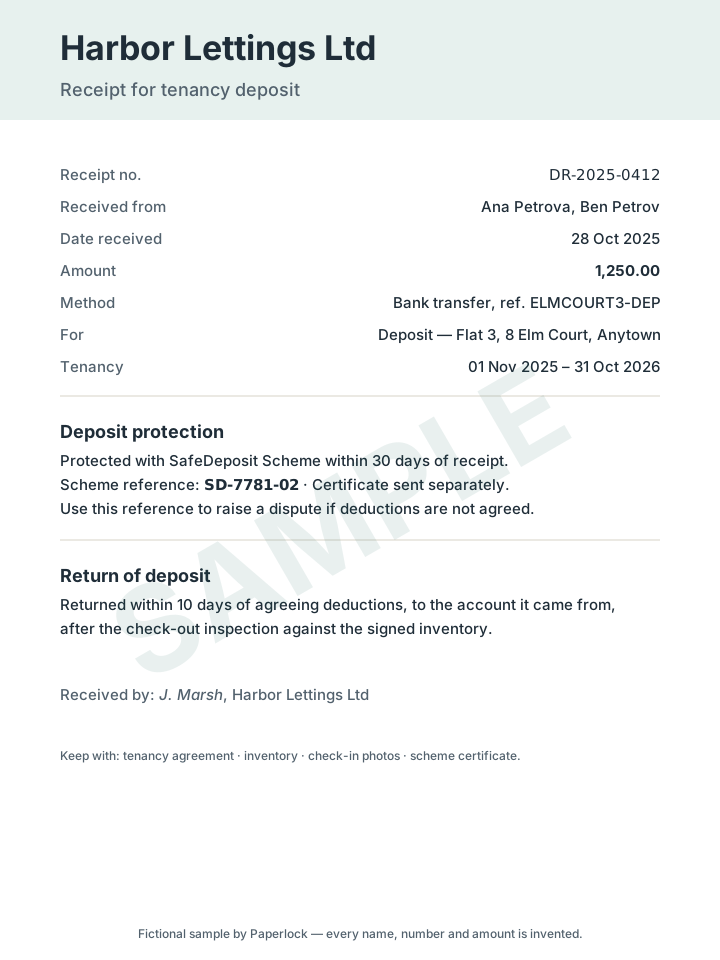
The sample is a receipt for the deposit on the fictional flat in the rental agreement example. It is a short document, and it needs to be: at the end of the tenancy the question is whether the money comes back, and every line here exists to make that question easy to answer.
What a proper receipt shows
| Line | On the sample | Why it matters at the end |
|---|---|---|
| Receipt number | DR-2025-0412 | The agent's lookup key |
| Paid by | Ana Petrova, Ben Petrov | Who is owed the refund |
| Date received | 28 Oct 2025 | Starts the clock for protecting the deposit |
| Amount | 1,250.00 | The number the refund is measured against |
| Method and reference | Bank transfer, ELMCOURT3-DEP | Matches your statement to this receipt |
| Property and tenancy | Flat 3, 01 Nov 2025 to 31 Oct 2026 | Ties the money to one agreement |
| Protection scheme and reference | SafeDeposit, SD-7781-02 | The route to a free dispute service |
| Return terms | Within 10 days of agreed deductions | The deadline you hold them to |
The protection reference is the line that matters most where deposit protection is law. It proves the deposit was registered, it is how you raise a dispute, and in some places a landlord who cannot produce it forfeits the right to make deductions at all.
The three documents that decide a deduction
The receipt proves how much you paid. It does not, on its own, get it back. A deduction argument is settled by three documents together:
- The receipt, for the amount and the protection reference.
- The lease, for the clause that says what condition the property must be returned in and how the deposit is returned.
- The check-in inventory and your dated photos, for what "original condition" actually looked like.
Keep them in one place from the first day. The check-out inspection will be compared against the check-in inventory, and "the wall was already marked" is an argument only a photo can make. The renting an apartment scenario covers the photos to take on day one.
What to do with the receipt on day one
- Compare it against your bank statement and note the transfer reference on the receipt if it is missing.
- Ask for the protection certificate if the receipt only promises it. The landlord usually has a fixed number of days to protect the deposit and tell you where.
- Work out the return deadline: the lease says how many days after check-out or after agreed deductions. Put your planned move-out date plus that period in the calendar when the time comes.
- Photograph the receipt. Agents change, offices close, and a receipt from a company that no longer exists is still evidence if you have it.
The questions this receipt will answer
- How much was the deposit, and when did we pay it?
- Where is it protected, and what is the reference?
- Who do we chase, and by when must it be returned?
- Does our bank transfer match what they say they received?
The manual way: one folder per address containing the receipt, the lease, the inventory and the check-in photos; a calendar entry for the notice deadline now and for the return deadline later. The back-up guide explains why that folder should exist in two places. The Paperlock way: photograph the receipt and the lease into the vault; Paperlock reads the amounts and dates, keeps everything for the address together, and "how much was the deposit on Elm Court?" is a question you can ask on the day you need it, with the receipt in the answer.