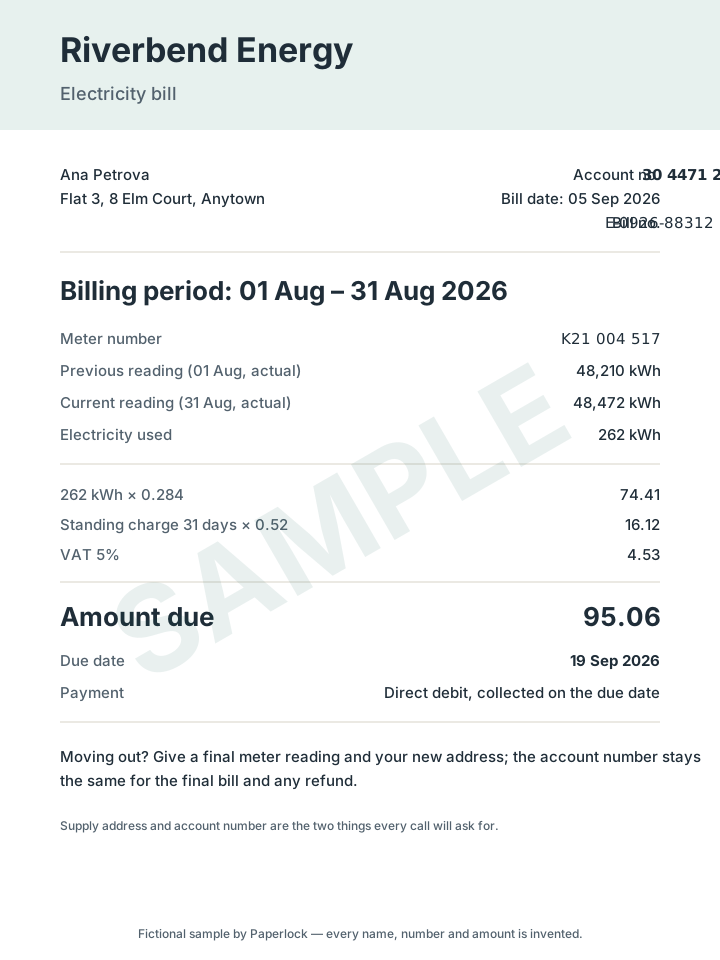
The sample is an electricity bill from a fictional supplier. It has the same anatomy as the gas, water and broadband bills in the same drawer, and the same two problems: it is asked for constantly (proof of address, account number) and argued over rarely but expensively (estimated readings, final bills after a move). Knowing which line is which solves both.
The lines and what they are for
| Line | On the sample | When you will need it |
|---|---|---|
| Account number | 30 4471 2209 | Every call, every switch, every complaint |
| Supply address | Flat 3, 8 Elm Court | Proof of address; confirms the bill is for your meter |
| Bill date and number | 05 Sep 2026, E-0926-88312 | Identifies this bill among dozens |
| Billing period | 01 to 31 Aug 2026 | Checks that periods do not overlap or leave gaps |
| Meter number | K21 004 517 | Confirms they are billing your meter, not a neighbour's |
| Readings, actual or estimated | 48,210 to 48,472, both actual | The evidence in any dispute about usage |
| Usage and unit rate | 262 kWh at 0.284 | Compare with last year and with other suppliers |
| Standing charge | 31 days at 0.52 | The part you pay even with the power off |
| Amount due and due date | 95.06 by 19 Sep 2026 | The deadline; late payment can cost more than the bill |
| Payment method | Direct debit on the due date | Whether you need to act or just have the money there |
The two lines that settle disputes
Almost every argument with a supplier comes down to meter readings. If the readings on the bill are marked estimated, the supplier guessed, and a run of guesses can end in a catch-up bill for hundreds. Submit your own reading before each bill date, or check that the smart meter is actually sending them. If the readings are actual and still look wrong, check the meter number on the bill against the meter on the wall; in blocks of flats, billing the wrong meter is not rare.
A photo of the meter with the date visible is the cheapest evidence there is. Take one on the day you move in, on the day you move out, and whenever a bill surprises you.
Which bills to keep, and for how long
You do not need every bill forever. Keep:
- The current bill until the next one confirms the balance carried forward.
- One bill per year per supplier as proof of address. Banks, government offices and landlords ask for a "recent utility bill," which usually means within three months, so the most recent one is the one that counts.
- Final bills after a move, until the account is closed and any credit refunded. See the moving house scenario for the sequence of readings and notices.
- All bills for a tax year, if you claim home-office or rental costs. The guide on what documents to keep and for how long covers retention periods.
Everything else can go once paid. The guide to organizing paper at home puts bills in the "keep for a while" box, not the "forever" one.
The questions this bill will answer
- What is our electricity account number?
- How much did we use last August, and what did it cost?
- Were those readings actual or estimated?
- Which bill counts as proof of address right now?
The manual way: photograph or download each bill as it arrives, name it with supplier and month, keep a note of account numbers somewhere separate, and purge paid bills once a year keeping one per supplier. The Paperlock way: photograph the bill into the vault; Paperlock reads the supplier, the period, the amount and the due date, files it with the others from the same account, and answers "what is our electricity account number?" while you are on hold with the supplier asking for it.